Why Utahns Need Mobility Work More Than Most: A Local Guide to Stretching, Recovery, and Living Pain-Free
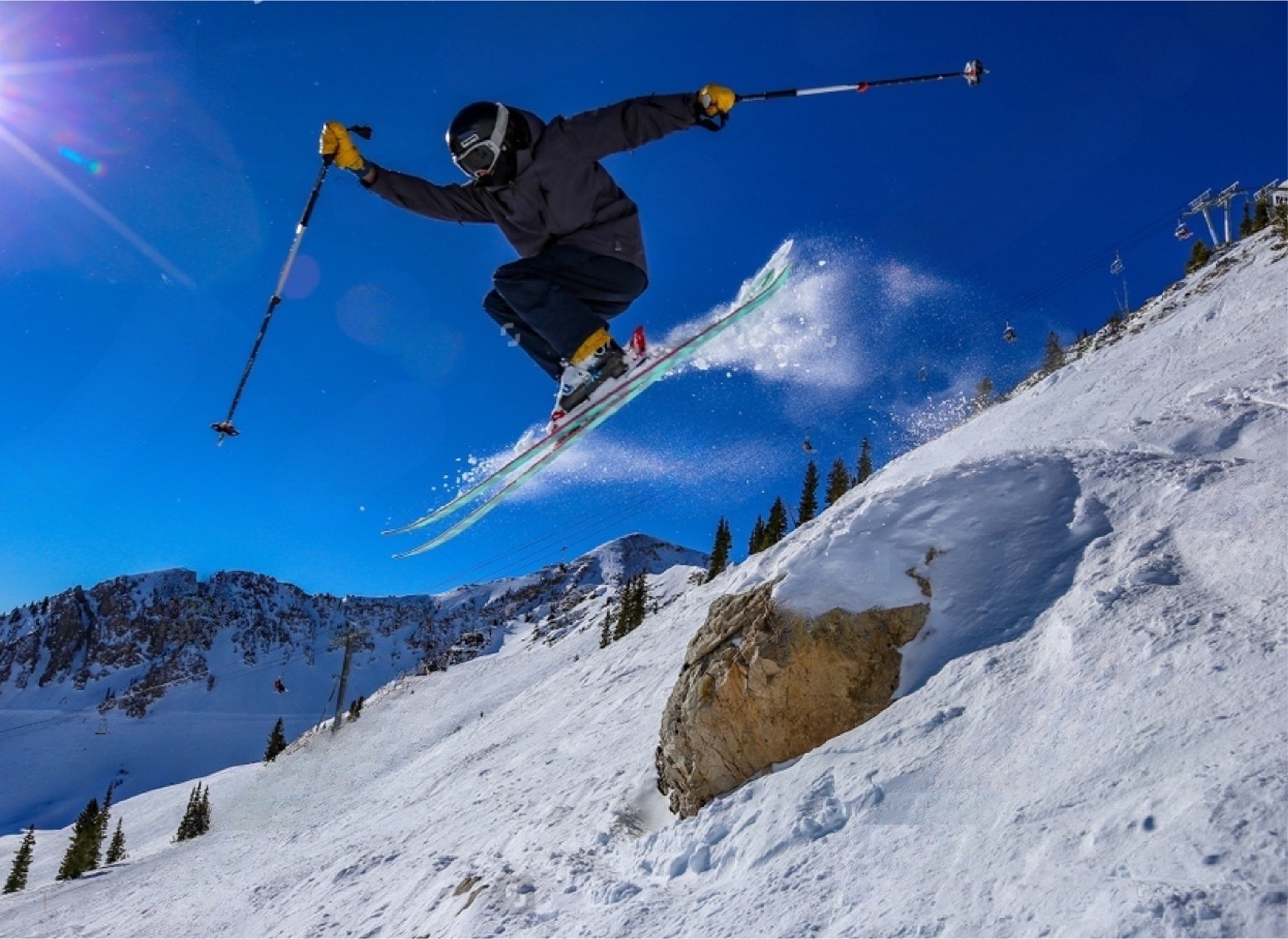
Utah is one of the most active states in the country. We hike Mount Olympus before work, ski Alta on weekends, ride the Bonneville Shoreline Trail on Wednesday nights, and squeeze in a Pickleball match before dinner. According to U.S. News & World Report, Utah has ranked first overall in its Best States rankings for four consecutive years, and the state consistently lands near the top for outdoor recreation participation. We are, statistically, a state that moves a lot.
But here is the paradox most Utahns feel in their bodies and not in their data: the same lifestyle that keeps us strong also wears us down in very specific ways. Thin mountain air pulls water out of our joints faster than at sea level. Long winters lock our hips into chairs and ski boots. Silicon Slopes has us hunched over keyboards from Lehi to Salt Lake. Then we head out for a 12-mile trail run on Saturday and wonder why our lower back feels like a brick on Sunday.
Mobility and recovery are not luxury add-ons for elite athletes. For people living a Utah lifestyle, basic maintenance is a must. This guide explains why our environment, our jobs, and our weekends make targeted stretching uniquely valuable here, what the research actually says about assisted stretching, and how to build a sustainable mobility practice without giving up your weekends.
Flexibility vs. Mobility: They Are Not the Same Thing
People use these words interchangeably, but they describe different qualities. Flexibility is the passive length a muscle can reach. If a friend pushes your leg toward your chest and your hamstring allows it, that is flexibility. Mobility is the active, controlled range of motion you can produce on your own across a joint. It combines flexibility, strength through that range, joint health, and nervous system control.
This distinction matters because a flexible person can still be immobile. Plenty of yoga students can fold deep into a pike yet still throw out their back lifting a toddler car seat. They have the tissue length but lack the strength and motor control to use it under load. Mobility is what carries over into real life: lifting a kayak onto a roof rack, scrambling up a slickrock ledge, or simply getting out of bed without wincing.
Harvard Health describes stretching as a form of “mobility protection” because it directly supports the range of motion that keeps us walking confidently, catching ourselves when we slip, and avoiding the falls that derail aging well. The Mayo Clinic similarly notes that stretching keeps muscles flexible, strong, and healthy, and that without it, muscles shorten and become tight, leaving you vulnerable to joint pain, strains, and muscle damage.
Why the Utah Environment Demands More Mobility Work
Living at elevations between 4,200 and 7,000+ feet along the Wasatch Front quietly changes how your body recovers. Three specific factors affect Utah residents more than most:
1. Altitude pulls water out of your joints
At elevation, you lose more fluid through respiration and sweat than you do at sea level. Even mild dehydration reduces the synovial fluid that lubricates joints, which translates to stiffness, achiness, and old injuries that flare without warning. The recommendation from altitude-medicine clinicians is to drink three to four liters of water daily if you are active outdoors in Utah, and to be extra deliberate about hydration on dry winter days when you do not feel thirsty.
2. The dry Wasatch climate accelerates muscle stiffness
Utah is among the driest states in the country. Dry air does not just chap your lips. It changes how connective tissue behaves. Fascia, the thin web that wraps around every muscle, is highly water-dependent. When it dehydrates, it becomes less glide-y and more Velcro-like, which is part of why so many Utahns wake up feeling “crunchy” even on rest days.
3. The Silicon Slopes desk job, then a 14er on Saturday
Utah is one of the fastest-growing tech economies in the U.S. Tens of thousands of us spend eight to ten hours a day at a keyboard, then attempt weekend warrior outings that demand full hip extension, thoracic rotation, and ankle dorsiflexion we have not used since Monday. Research on prolonged sitting shows discomfort builds across the low back, hips, and thighs over the course of a workday, and that pattern compounds when the weekend asks the body to perform suddenly.
What the Research Actually Says About Stretching
Stretching has had a complicated reputation in the last decade. You may have read headlines claiming static stretching before a workout reduces strength, or that stretching does not actually prevent injuries. Both have a kernel of truth, and both are routinely misread.
Here is the honest summary of where the science currently sits:
- Stretching reliably improves joint range of motion. This is the most consistent finding across decades of studies and is acknowledged by Mayo Clinic, Harvard Health, and the American College of Sports Medicine.
- A 2024 systematic review published in the National Library of Medicine concluded that chronic stretch training (four weeks or longer) produces meaningful reductions in musculoskeletal pain across multiple body regions.
- Proprioceptive Neuromuscular Facilitation, or PNF stretching, has been shown in peer-reviewed research to outperform static stretching for improving hamstring and lower-leg range of motion. A study indexed by the National Library of Medicine documents PNF’s superior effect on both active and passive range of motion.
- Stretching has measurable effects on the nervous system, too. Research on stretching intensities published in 2023 found that moderate-intensity stretching shifted participants toward parasympathetic dominance, the body’s “rest and digest” state.
- Stretching does not magically prevent every injury. The evidence for static stretching as an injury-prevention tool is mixed, but dynamic mobility work as part of a warmup, combined with strength training, consistently lowers injury risk.
The takeaway is not that stretching is overhyped. It is how you stretch that matters as much as whether you stretch.
PNF: The Stretching Method Built for People Who Live in Their Bodies
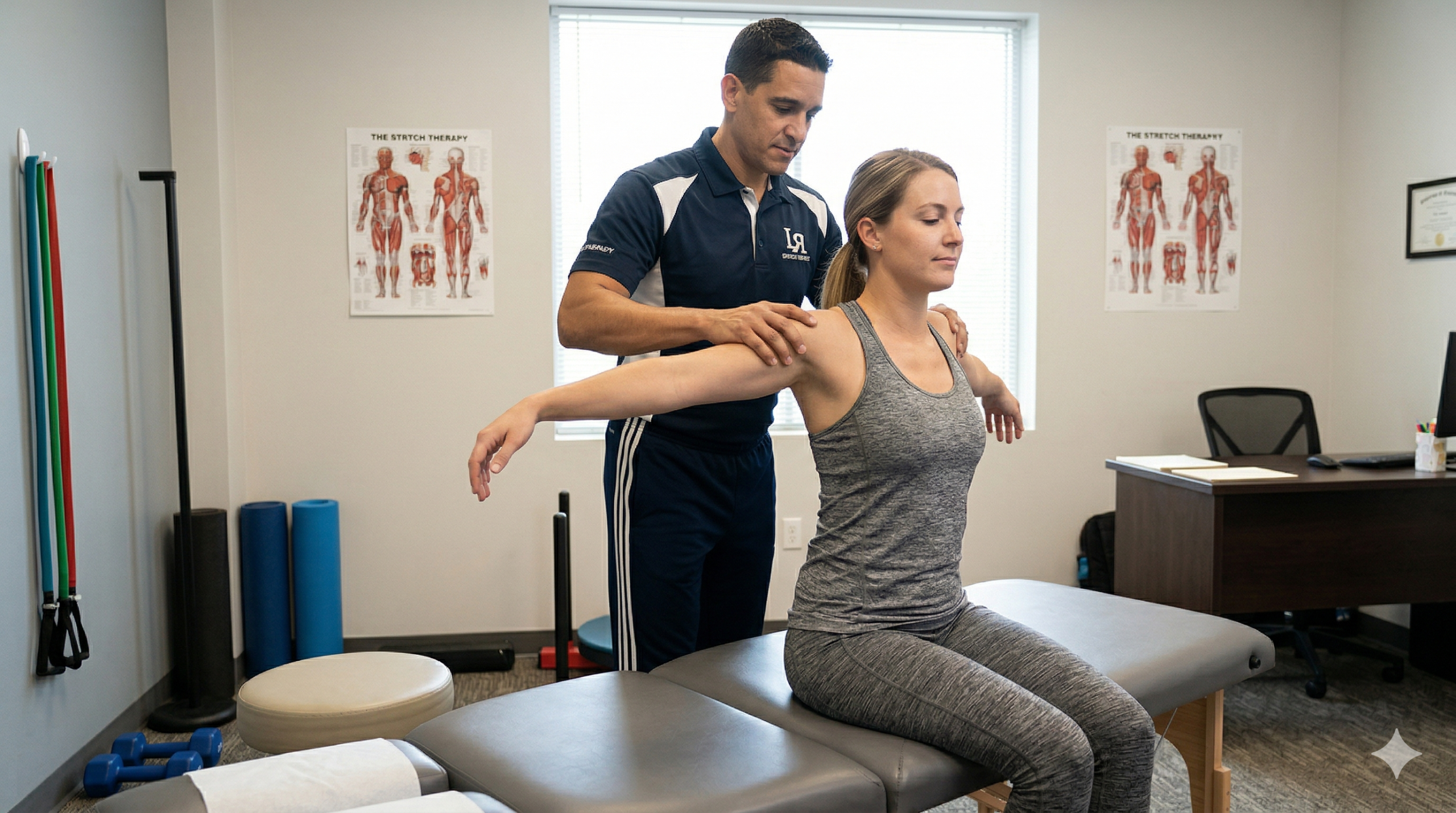
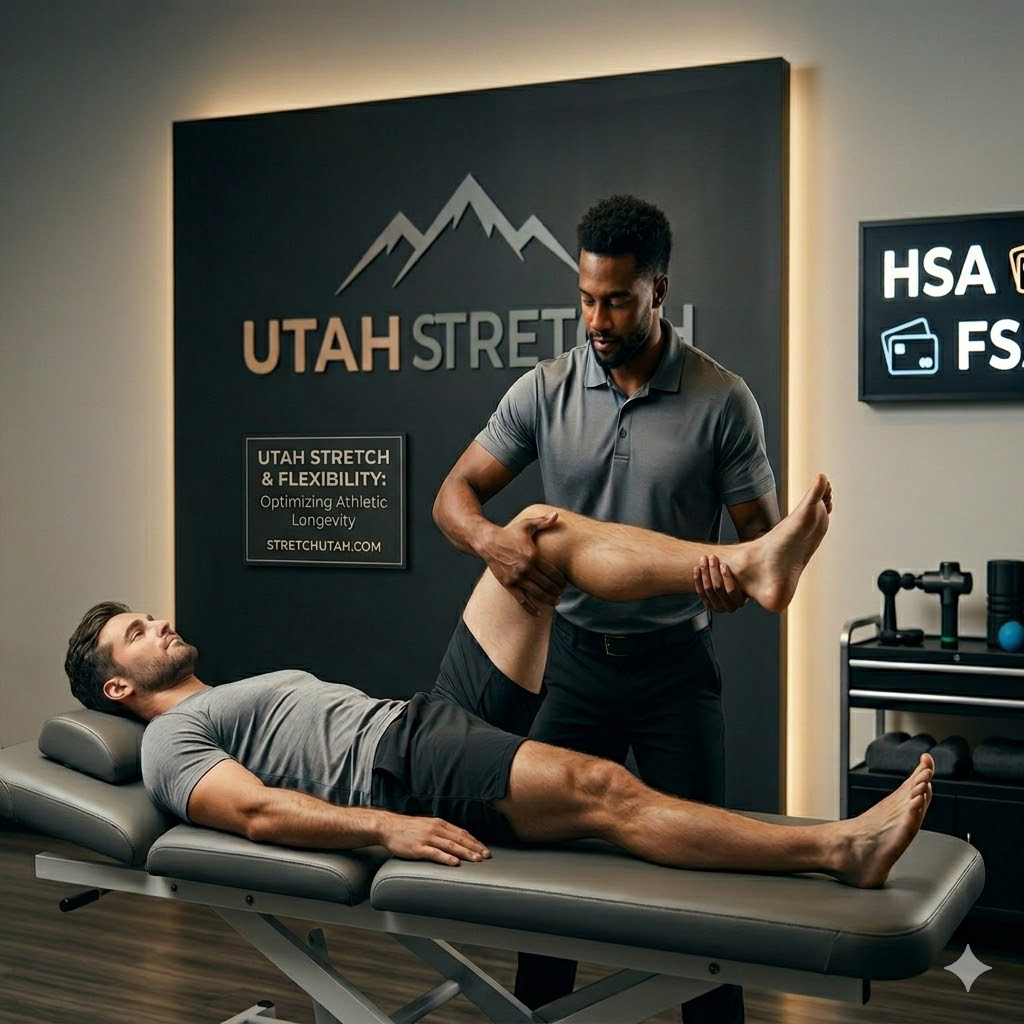
At Utah Stretch & Flexibility, our Movement Specialists primarily use Proprioceptive Neuromuscular Facilitation, or PNF, with each client. If you have never tried it, the simplest way to picture it is this: your practitioner takes a muscle to its end range, you gently contract that muscle against their resistance for several seconds, you relax, and they ease you a little deeper. Repeat.
That contract-relax sequence does something static stretching cannot. It briefly resets the protective tension signals your nervous system uses to limit a stretch. Your muscle spindles essentially get a new, more generous “safe” range to work within. The result is a broader range of motion in a single session than most people can achieve on their own in weeks.
Published research on PNF supports this in practice. One frequently cited paper indexed in PubMed Central concluded that PNF stretching is an effective technique for increasing the range of motion and improving muscular function. Another study on older adults with osteoarthritis found PNF improved both range of motion and balance, two factors directly tied to fall prevention. That is why we use it for everyone from desk workers with locked-up hips to seventy-year-old skiers protecting their independence.
The Five Mobility Limitations We See Most Often in Utah Clients
Across thousands of one-on-one sessions, certain patterns repeat. If two or more of these feel familiar, you are not unusual. You are normal for Utah, and you are also a great candidate for assisted work.
Locked-down hip flexors
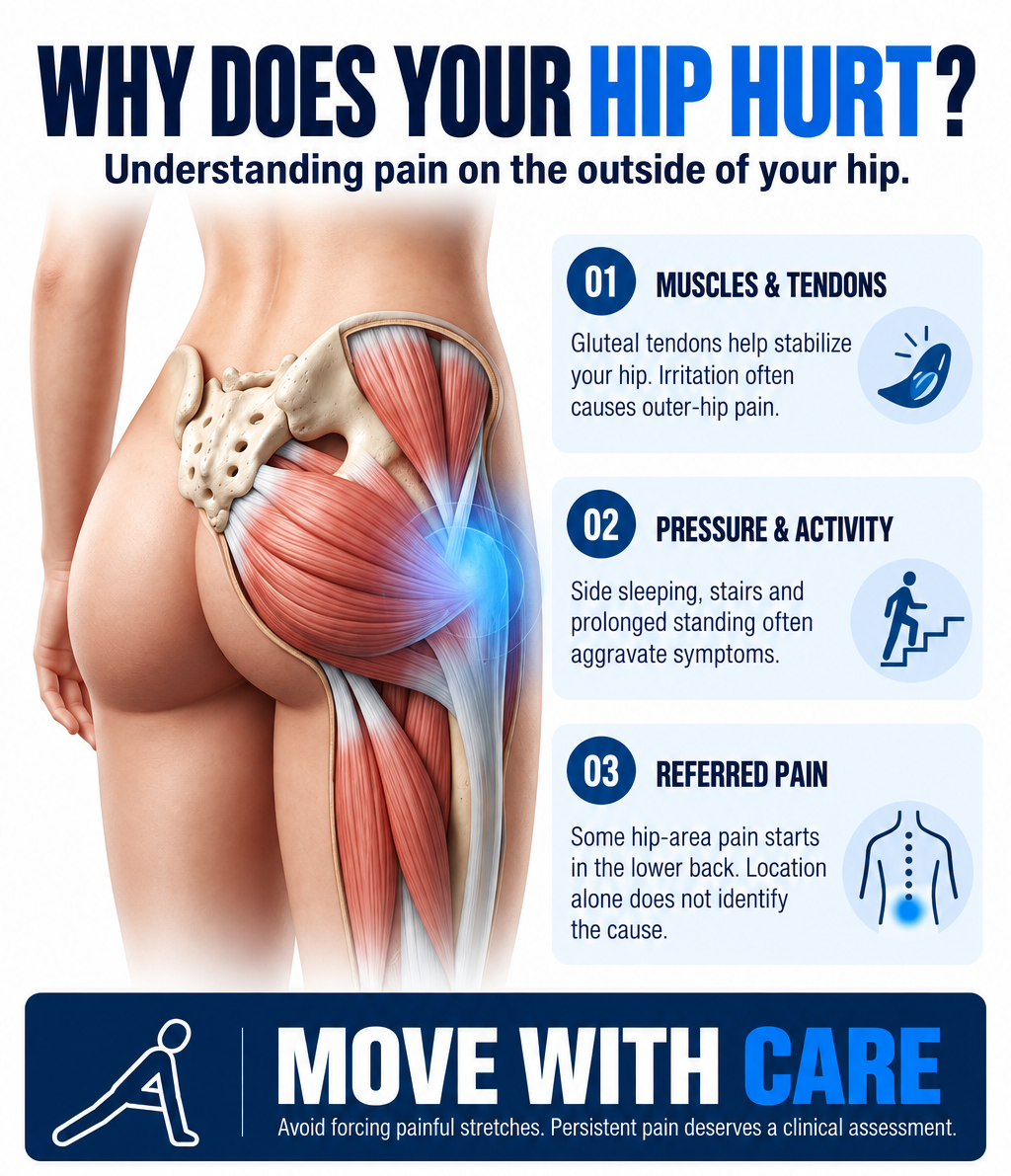
Sitting all day shortens your hip flexors, which then yank on your lower back when you stand up to hike. The result is the classic Utah complaint: a low back that aches after a long trail day, even though you trained for it.
A frozen thoracic spine
Your mid-back is built to rotate. Office work, scrolling, and driving train it to do the opposite. Lost thoracic rotation shows up as a flat golf swing, restricted shoulder mobility, neck strain, and a punished lower back. When trying to do rotation, the mid-back should be handled.
Stiff ankles from ski boots and hiking boots
Utahns spend a lot of time in supportive footwear that immobilizes the ankle. Reduced ankle dorsiflexion forces the knee or hip to compensate, which is one of the most overlooked drivers of knee pain in skiers and runners.
Tight pec minor and forward shoulders
Every hour at a laptop nudges the shoulders forward and shortens the pectoralis minor. This is the muscle behind that nagging upper-trap tension you cannot seem to massage away, plus the headaches that arrive around 3 pm.
Dehydrated, glued-down fascia
Particularly common in summer and winter, when our dry climate is most aggressive. Fascia restrictions can make you feel “old” decades early, and you do not respond well to muscle-only treatments. Combined approaches such as assisted stretching, Soft Tissue Mobilization, Graston Technique, and compression band work target layers that static stretching alone cannot reach.
How to Build a Mobility Practice That Fits a Utah Schedule
Most Utahns do not need an hour of daily stretching. They need a few high-leverage habits and a periodic professional reset. Here is a realistic framework:
- Hydrate first. Aim for half your body weight in ounces of water per day as a baseline, more if you are at elevation or working out. Without water, no amount of stretching will keep your fascia happy.
- Do five minutes of morning mobility, not stretching. Think gentle joint circles, cat-cow, a 90/90 hip switch, and a doorway pec stretch. The goal is to wake the nervous system up to your full range, not to deepen anything.
- Move every 30 minutes during the workday. Set a timer. Stand up, do five squats, reach overhead, and rotate your spine in each direction. This single habit prevents more low-back pain than any single stretch.
- Warm up dynamically before activity. Save static holds for after. A short dynamic warm-up (leg swings, walking lunges, hip openers) is what the Mayo Clinic specifically endorses for its injury-prevention value.
- Use end-of-day static stretching to downshift. Hold each stretch 60 to 90 seconds. Research shows this duration shifts the nervous system into parasympathetic mode, which improves sleep.
- Book a professional assisted stretch every two to four weeks. Like dental cleanings or oil changes, periodic professional work catches restrictions before they become injuries and lets you go far deeper than you can solo.
When to Stop DIY-ing and Book an Assisted Session
Self-care has its limits. There are specific signs it is time to work with a trained Movement Specialist instead of another YouTube routine:
- You have been doing the same stretches for months without lasting change.
- One side of your body feels noticeably tighter than the other.
- You are dealing with a chronic pain pattern (low back, neck, hips, plantar fascia) that flares back up no matter what you try.
- You are training for a specific event, peak ski season, or recovering from an old injury and want to bulletproof your body.
- You have a desk job and feel a year older every Monday morning.
In a one-on-one session at Utah Stretch & Flexibility in Midvale, your practitioner will assess movement asymmetries, identify the soft-tissue restrictions driving your pattern, and apply techniques such as assisted PNF stretching, Soft Tissue Mobilization, compression band therapy, Graston Technique, and kinesiology taping as appropriate. The work is calibrated to you, not to a generic protocol.
Frequently Asked Questions About Stretching and Recovery in Utah
How often should I get an assisted stretch?
For most general wellness clients, every two to four weeks works well. People recovering from injury, training for a specific event, or managing chronic pain often benefit from weekly sessions until things stabilize. We help you find the right cadence at your first visit.
Is assisted stretching the same as massage?
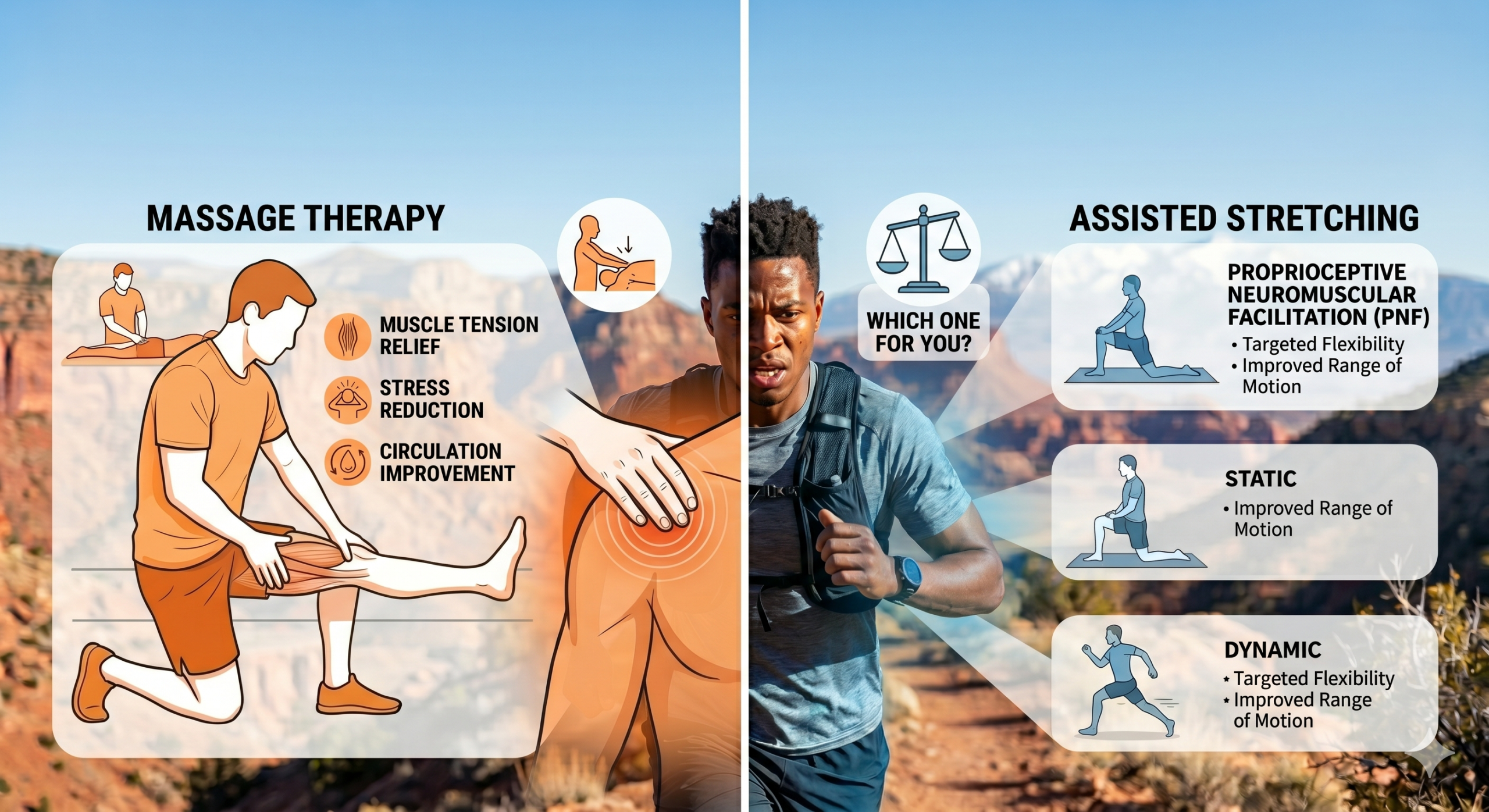
No. Massage primarily works on soft tissue with strokes and pressure while you are passive. Assisted stretching, especially PNF, asks you to engage your muscles at strategic moments, gently. Both relieve tension, but assisted stretching produces lasting changes in range of motion that massage alone usually does not.
Will I be sore after a stretch session?
Most clients leave feeling lighter and more open, not sore. Some people experience mild next-day muscle soreness, similar to that after a light workout, especially in their first few sessions, because PNF involves brief muscle contractions. It typically resolves in 24 hours.
What should I wear to my session?
Comfortable, stretchy clothing you can move in. Athletic wear, leggings, joggers, and a t-shirt all work. Avoid jeans or anything restrictive at the hips and shoulders.
Can stretching really help my desk-job pain?
Yes, especially when combined with movement breaks during the day. Published research on desk-based workers confirms that musculoskeletal discomfort accumulates with prolonged sitting, particularly in the low back, hip, and thigh regions, and that targeted interventions reduce it. Many of our Silicon Slopes clients schedule monthly sessions specifically to manage this.
Is this safe for older adults?
Assisted stretching is one of the safest interventions for older adults because the practitioner controls everything and keeps it within the active range. Research on PNF in older women with osteoarthritis found improvements in range of motion, strength, and balance, all of which support healthy aging and fall prevention.
Move Better in Utah. Live Better in Utah.
You do not need to give up the things you love because your body has started saying no. Utah’s altitude, climate, and lifestyle ask a lot of our bodies, and they reward those who give a little back through intentional mobility work.
Whether you are protecting a long ski career, undoing a decade of desk posture, training for the Wasatch Back relay, or simply trying to get out of bed without that morning groan, professional assisted stretching is one of the highest-leverage investments you can make in how you feel every single day.
Utah Stretch & Flexibility is located at 47 E Fort Union Blvd, Suite 201, in Midvale, serving the greater Salt Lake area, including Salt Lake City, Sandy, Cottonwood Heights, Draper, Holladay, and the entire Wasatch Front. New clients can book a 45-minute introductory PNF stretch and evaluation for $0, or call us directly at 801-738-7966 to start moving better.