Upper Crossed Syndrome: Utah Guide to Neck, Shoulder, and Posture Relief
If your neck and shoulders always feel tight after a day at the computer, you are not alone. Many adults across Utah deal with forward head posture, rounded shoulders, and stubborn aches that just do not seem to go away. This pattern is often called upper crossed syndrome, and it can quietly affect how you work, drive, and enjoy the outdoors.
At Utah Stretch and Flexibility, clients come in every week with this exact combination of neck stiffness, shoulder tension, and poor posture. This guide will walk you through what upper crossed syndrome is, how to spot it, and simple evidence-informed routines you can start today, plus how local stretch sessions can support your progress.
What Is Upper Crossed Syndrome?
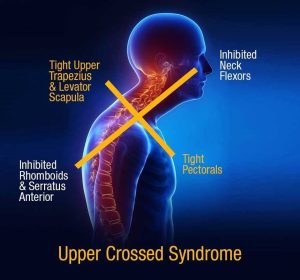 Upper crossed syndrome (UCS) is a common pattern of muscle imbalance in the neck, chest, and upper back that leads to a forward head position and rounded shoulders. It tends to show up in people who spend long periods sitting at a computer, using devices, or driving with a slumped posture. Over time, this pattern can contribute to neck pain, shoulder pain, and headaches
The Muscle Imbalance Pattern (Tight vs Weak)
In upper crossed syndrome, certain muscles tend to become overactive and tight while others become underactive and weak. The tight group usually includes the upper trapezius and levator scapulae in the back of the neck and shoulders, along with the pectoral muscles in the front of the chest. The weaker group commonly involves the deep neck flexors in the front of the neck and the mid to lower trapezius and serratus anterior muscles around the shoulder blades.
Because these muscle groups “cross” between the front and back of the upper body, the shoulders are pulled forward and the head drifts out in front of the body. This makes it harder for the deep stabilizing muscles to do their job, so larger, tension-prone muscles take over and fatigue more quickly.
As this pattern persists, you may notice forward head posture, increased curvature in the upper back (thoracic kyphosis), and shoulders that sit rounded and slightly elevated toward the ears. These postural changes are characteristic of UCS in many clinical descriptions and research studies.
Common Signs and Symptoms to Watch For
Upper crossed syndrome does not always cause immediate sharp pain, but it often produces a familiar set of aches and stiffness. People with UCS frequently report:
Dull or aching neck pain, especially after sitting.
Tightness across the chest and front of the shoulders.
Soreness or heaviness between the shoulder blades.
Headaches that start at the base of the skull and move forward.
Fatigue with overhead reaching or lifting.
Postural Changes You Can Spot in the Mirror
You can do a quick self-check at home in front of a mirror. Stand sideways and look for these signs:
Your ears sit in front of your shoulders instead of roughly over them.
Your shoulders round forward and may look slightly elevated.
Your upper back looks more curved than straight.
These simple cues are not a medical diagnosis, but they can alert you that your posture has shifted toward an upper crossed pattern and may benefit from targeted stretching and strengthening.
Beyond how it looks, UCS can affect how you live. It can make long workdays at a desk harder, aggravate neck and shoulder discomfort during drives along I‑15, and limit how comfortable you feel during Utah activities like skiing, hiking, or lifting at the gym.
Why Upper Crossed Syndrome Is So Common in Utah Adults
For many people along the Wasatch Front, a typical day involves long periods sitting at a computer followed by time on a phone or tablet. Studies in office workers show a strong link between prolonged computer use, forward head posture, and upper crossed syndrome, with neck pain reported by more than half of computer users in some samples.
Add in daily commuting between communities like Ogden, Salt Lake City, and Provo, and you have hours each week with your spine flexed and your head slightly forward. Even fun activities like gaming, scrolling social media, or watching shows can reinforce the same head‑forward, shoulders‑rounded position.
Clinicians also point out that while upper crossed syndrome is a helpful way to describe this common pattern, it is not a formal diagnosis with its own medical code. That means two people with similar posture may have different underlying issues, which is why an individualized assessment is important
How Clinicians Assess Upper Crossed Syndrome
Physical therapists, chiropractors, physicians, and movement specialists typically begin with a detailed history and a posture and movement assessment. They look at how you stand and sit, where you feel pain, and which activities make your symptoms better or worse. Research-based guidelines emphasize posture observation and targeted movement tests to understand muscle imbalances and joint restrictions.
Common assessment elements can include:
Standing posture: looking at ear–shoulder alignment and shoulder position.
Chin tuck ability: seeing whether you can gently draw your head back over your shoulders.
Shoulder blade motion: watching how the shoulder blades move during arm raises or wall slides.
If you have red-flag symptoms such as significant trauma, worsening numbness or tingling, true weakness, unexplained weight loss, or severe unrelenting pain, imaging and medical evaluation are important. These signs can suggest conditions beyond simple muscle imbalance and should be evaluated promptly by a healthcare professional.
Conservative Treatment: Stretching, Strengthening, and Education
Current research supports conservative, non-surgical management as a first-line approach for most people with upper crossed syndrome. Narrative and systematic reviews highlight corrective exercise, posture education, and manual therapy as effective strategies to improve alignment, reduce pain, and enhance function over several weeks.
Key Stretches for Tight Muscles
Because the chest and upper neck/shoulder muscles tend to be shortened, stretching them gently and consistently is a central part of most programs. Typical targets include:
Pectoralis major and minor in the chest.
Upper trapezius across the top of the shoulders.
Levator scapulae at the back and side of the neck.
These stretches help open the front of the body and reduce the constant pull that rounds the shoulders and lifts them toward the ears
Strengthening the Right Muscles
Stretching alone is rarely enough. Strengthening the deep neck flexors and upper back muscles helps restore balance and support better posture. Deep neck flexor training, such as chin tucks, is commonly used to counter forward head posture, while exercises like rows and wall angels target the mid and lower trapezius and the muscles that stabilize the shoulder blades.
These exercises aim to reduce overreliance on tension‑prone muscles and teach your body to sit and move with less effort. Research based on Janda’s approach suggests that coordinated programs combining muscle lengthening, motor control work, and strengthening can improve alignment and muscle activation patterns in people with UCS.
Role of Manual Therapy and Assisted Stretching
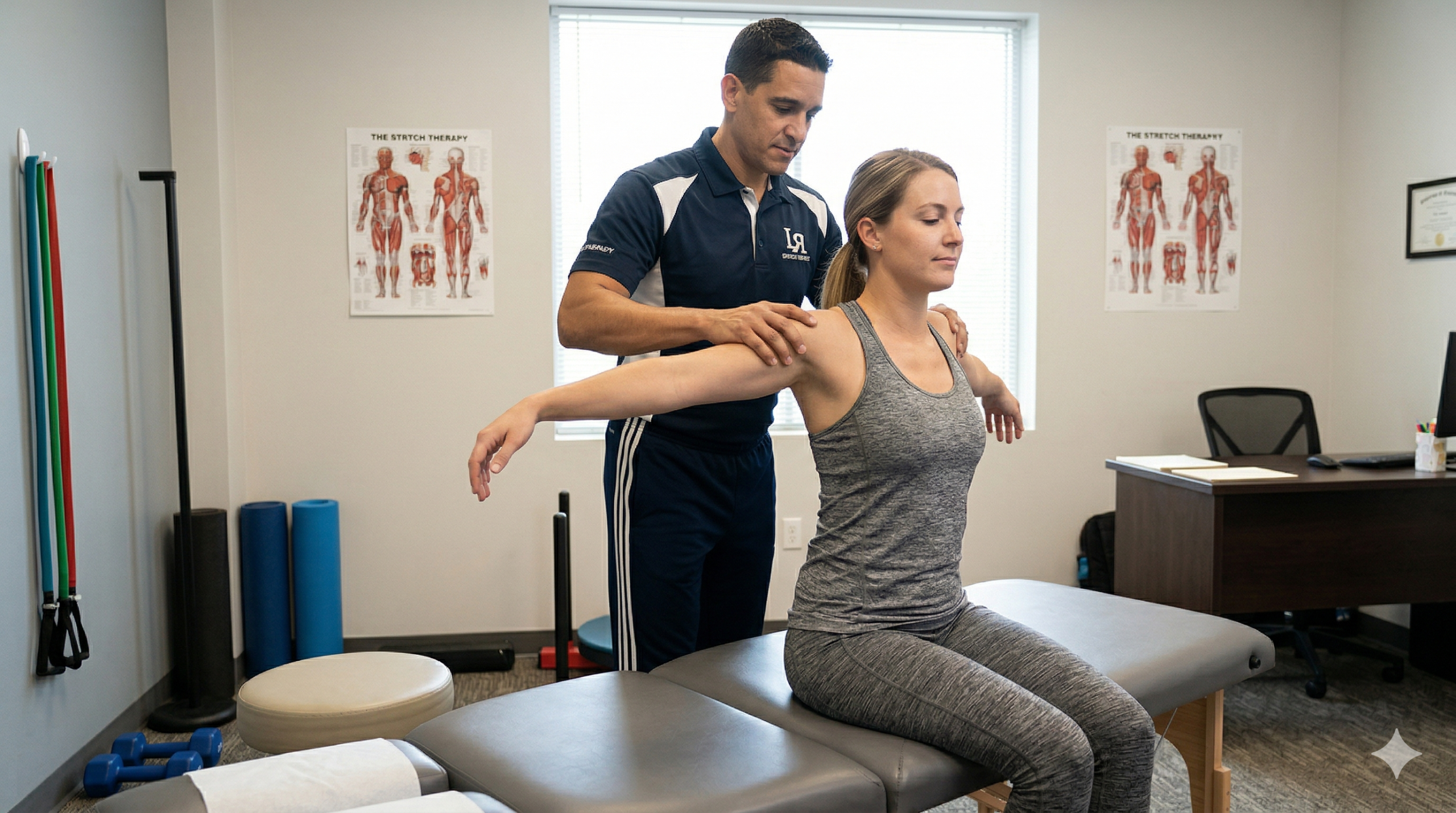
For many people, hands-on approaches can make it easier to move into better positions. Physiotherapy literature describes soft-tissue techniques, joint mobilization, and assisted stretching as useful adjuncts to exercise when addressing upper crossed patterns.
Utah Stretch and Flexibility, a stretch specialist gently guides your body through targeted stretches for the chest, neck, and shoulders while you stay relaxed. These sessions can improve range of motion, help you feel where neutral posture should be, and make home exercises feel more comfortable. They do not replace medical care, but they can be a valuable part of a conservative plan designed with your healthcare team.
If you want to feel what assisted stretching can do for your posture, consider scheduling a posture‑focused stretch session at Utah Stretch and Flexibility in Midvale.
Sample 5-Minute Desk Stretch Routine
Even a few minutes of movement during the day can ease tension and break up long periods of sitting. Here is a quick 5‑minute routine you can try at your desk, ideally two or three times a day.
1. Seated Chin Tuck
Sit tall on your chair with your feet flat and your shoulders relaxed.
Gently draw your chin straight back, as if making a “double chin,” keeping your eyes level.
Hold for 3–5 seconds, then relax.
Repeat 8–10 times, moving slowly and without pain.
This exercise activates the deep neck flexors that often become weak in upper crossed syndrome and helps realign the head over the shoulders.
2. Seated Chest (Pec) Stretch at Desk
Sit sideways near the edge of your desk or a doorway.
Place your forearm on the desk or doorframe with your elbow roughly at shoulder height.
Gently turn your chest away until you feel a stretch in the front of your shoulder and chest.
Hold 20–30 seconds, breathing slowly, and repeat 2–3 times each side.
This stretch targets the pectoral muscles, which tend to become shortened and pull the shoulders forward in people with UCS.
3. Seated Upper Trap / Levator Stretch
Sit tall and gently hold the edge of your chair with one hand.
With the other hand, lightly guide your head away from the anchored side, bringing your ear toward your opposite shoulder.
Rotate your nose slightly toward or away from your armpit until you feel a comfortable stretch along the side or back of your neck.
Hold 20–30 seconds, then switch sides.
This stretch helps reduce tension in the upper trapezius and levator scapulae, muscles frequently tight in upper crossed patterns.
4. Seated Thoracic Extension Over Chair Back (Optional)
Sit tall with your back against the chair, hands lightly supporting the back of your head.
Gently lean your upper back over the top of the chair, keeping your lower ribs from flaring too much.
Move in and out of this position for 8–10 slow repetitions, stopping if it causes pain.
This movement encourages extension in the upper back, which can counteract the rounded thoracic posture seen in UCS.
Always move within a comfortable range. If any of these positions cause sharp pain, numbness, or symptoms down your arm, stop and consult a healthcare professional.
15–20 Minute Home Routine for Lasting Change
For deeper and longer‑lasting change, research suggests combining stretching and strengthening exercises in structured programs over six to eight weeks or more. Here is a sample 15–20 minute routine you can perform three to four days per week, adjusted as needed.
Start with 1–2 minutes of gentle warm‑up, such as arm circles, shoulder rolls, or easy walking around your home.
1. Doorway Pec Stretch
Stand in a doorway with your forearms on the doorframe and elbows at about shoulder height.
Step one foot forward and gently lean your body through the doorway until you feel a stretch across your chest.
Keep your shoulders down away from your ears and avoid arching your lower back.
Hold 20–30 seconds and repeat 2–3 times.
This stretch lengthens the pectoral muscles that pull the shoulders forward, helping you stand taller with less effort.
2. Child’s Pose with Side Reach
Start on hands and knees, then sit your hips back toward your heels, stretching your arms forward on the floor.
Walk both hands slightly to the right to feel a stretch along the left side of your trunk and upper back; hold 20–30 seconds.
Walk hands to the left and repeat on the other side.
This variation of child’s pose opens the lats and upper back, improving mobility in the thoracic spine and rib cage.
3. Chin Tucks at Wall
Stand with your back against a wall, heels a few inches away, and the back of your head gently touching the wall if comfortable.
Draw your chin straight back, sliding the back of your head up the wall slightly, without tilting your head up or down.
Hold 3–5 seconds and repeat 10–12 times.
This progression builds endurance in the deep neck flexors and reinforces the feeling of your head aligned over your torso.
4. Wall Angels (“Snow Angels”)
Stand with your back, hips, and as much of your upper back as comfortable against a wall.
Place your arms against the wall in a “goalpost” position if you can, with elbows bent and hands near shoulder height.
Slowly slide your arms up and down the wall like making snow angels, keeping your chin gently tucked.
Perform 8–12 controlled repetitions.
Wall angels strengthen the mid and lower trapezius and improve shoulder blade control, key components of better posture in UCS.
5. Band or Bodyweight Row
Attach a resistance band to a secure point at chest height, or use a suspension trainer or cable if available.
Hold the band with both hands, arms straight in front; then pull your elbows back, squeezing your shoulder blades gently together without shrugging.
Pause briefly, then return with control; perform 10–15 repetitions.
Rows strengthen the muscles between the shoulder blades that counteract rounded shoulders and support the neck and upper back.
Finish with 1–2 minutes of relaxed breathing and gentle neck and shoulder movements. Consistency is more important than intensity; studies on corrective exercise for UCS often use programs lasting at least 6–8 weeks to see meaningful changes in posture and symptoms.
When to Seek Professional Help in Utah
While many people can safely start with the exercises above, you should seek professional evaluation if you notice red-flag signs. These include severe or worsening pain, numbness or tingling in the arms, true weakness, loss of coordination, or symptoms after a fall or accident. Getting checked by a healthcare provider is especially important if your symptoms have lasted longer than a few weeks without improvement.
In Utah, physical therapists, chiropractors, and physicians commonly evaluate upper crossed patterns and can rule out more serious problems. They may recommend imaging, prescribe medication if needed, and coordinate care that includes exercise, education, and manual therapy. UCS can sometimes contribute to more complex issues like shoulder impingement or cervicogenic headaches if not addressed early, so do not ignore persistent symptoms.
How Utah Stretch and Flexibility Can Support Your Recovery
Utah Stretch and Flexibility offers one-on-one assisted stretching sessions designed to help you move more freely and feel less tension in your neck and shoulders. During a visit, a stretch specialist guides you through comfortable stretches for the chest, neck, and upper back while you stay relaxed, focusing on the areas most involved in upper crossed syndrome.
What to Expect at a Stretch Session
A typical session may begin with a brief posture and movement check to see how your neck and shoulders are behaving that day. From there, your specialist uses gentle, controlled stretches and positioning to open tight muscle groups, often combined with breathing and relaxation cues to help your nervous system calm down. You may also leave with a few simple home exercises, like the chin tucks and wall angels described above, so you can keep making progress between visits.
If you live or work near Midvale, Sandy, Draper, or Salt Lake City and are noticing signs of upper crossed syndrome, scheduling a posture‑focused stretch session can be a practical first step. Use the contact page to book a stretch assessment at Utah Stretch and Flexibility and start building a plan that fits your schedule and goals